
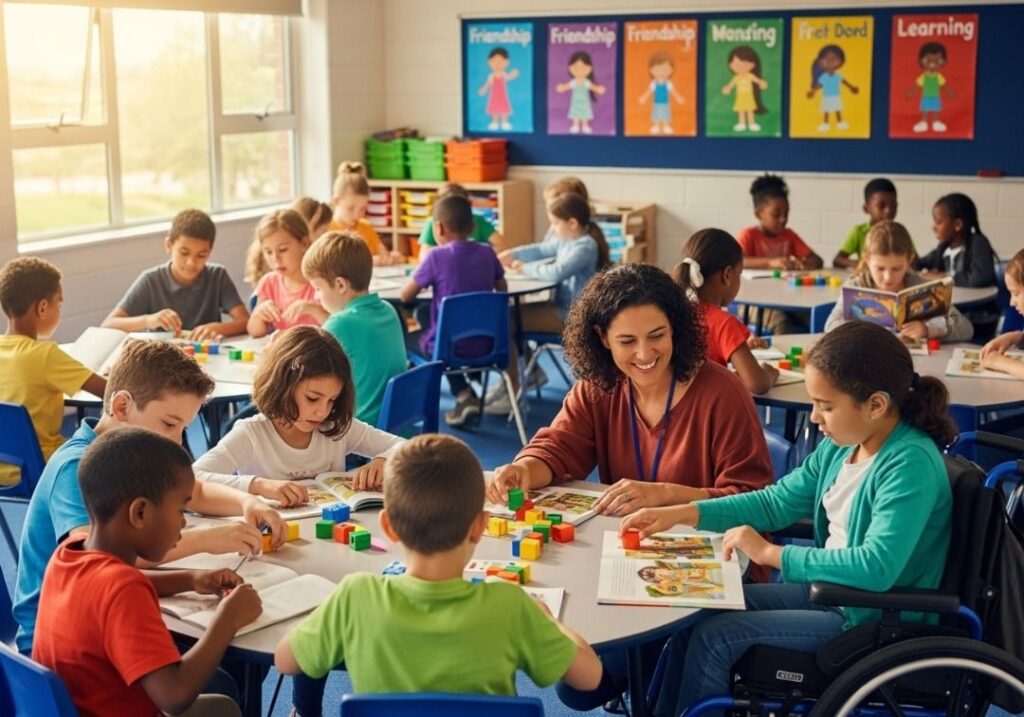
Inclusive education is more than an educational model—it’s a mindset that recognizes the unique strengths and abilities every child brings into the classroom. For decades, many children with developmental challenges were separated from mainstream learning environments, limiting their social interactions, academic growth, and overall confidence. Today, research and lived experiences have shown that inclusive education does not just benefit children with special needs—it enriches the entire learning community.
At its core, inclusive education ensures that all children, regardless of ability, background, or learning style, learn together in the same environment. This approach acknowledges that no two children are alike. Instead of forcing one learning style on an entire class, inclusive education adapts teaching methods so that each child has the opportunity to succeed.
One of the major benefits of inclusive education is improved social interaction. Children learn empathy, patience, and communication when they share classrooms with peers who have diverse abilities. These early lessons in compassion shape the way they engage with the world long after they leave school. Children exposed to diverse learning environments tend to develop stronger emotional intelligence and a more profound sense of community.
Academically, inclusive learning environments encourage creativity and adaptability. Educators incorporate multiple teaching techniques—visual aids, hands-on activities, technology-assisted lessons, and group work—to accommodate different learning needs. These strategies benefit all students, not just those with developmental challenges. When teaching methods evolve, student engagement increases, and the overall classroom dynamic improves.
Another key pillar of inclusive education is individualized support. Children with learning or developmental differences may require additional help, such as therapy-based teaching, one-on-one assistance, or specialized tools. Providing these resources within the classroom ensures that the child does not feel isolated or singled out. Instead, they grow in a supportive environment where peers understand and respect their journey.
Inclusive education also strengthens families. Parents feel empowered when schools work collaboratively with them, valuing their insights and playing an active role in their child’s learning process. This partnership builds trust and ensures that children receive consistent support at home and in school.
From a societal perspective, inclusive education prepares children to function in a diverse world. When children learn to collaborate across differences, they become adults who can lead with empathy, respect, and understanding. This contributes to stronger communities and workplaces where everyone feels valued.
Despite its many benefits, inclusive education requires commitment. Schools need resources, training, and policies that reinforce inclusion. Yet the effort is worthwhile, because the results are transformative. Inclusive education changes lives—not only for children with developmental challenges but for everyone in the learning environment.
When we create classrooms where every child belongs, we create a world where every child can thrive. Inclusion is not just a teaching strategy; it is an act of love, equality, and vision for a better future.